Performer
Kristján Eldjárn
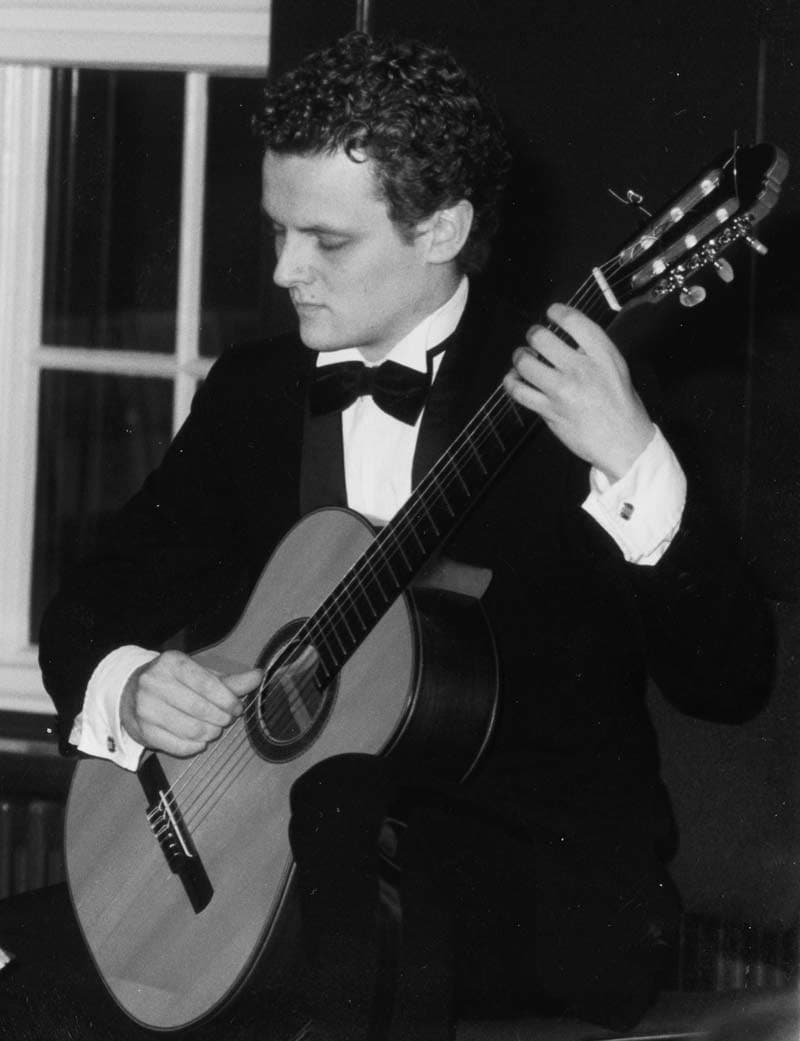
Kristján Eldjárn Þórarinsson (16 June 1972 – 22 April 2002) was an Icelandic guitarist whose work encompassed both classical and electric guitar. Born in Reykjavík, he died shortly before reaching the age of thirty. Though brief in chronological terms, his career included solo performance, ensemble work, recordings, arranging, teaching, and music made for stage and screen-related projects. Accounts published by his memorial fund emphasize that he did not confine himself to a single genre: he applied his training and instrumental range across different parts of Icelandic musical life, while also participating in work beyond Iceland.
Eldjárn began studying guitar at an early age at the Reykjavík Music Education School and the Reykjavík School of Music. Among his teachers there were Eyþór Þorláksson and Páll Eyjólfsson. He subsequently studied classical guitar with Einar Kristján Einarsson at Tónskóli Sigursveins, completing his final diploma there in spring 1996. Alongside that classical course of study, he attended the jazz department of the FÍH School of Music for electric guitar. His teachers there included Eðvarð Lárusson, Hilmar Jensson, and Sigurður Flosason; he completed a final diploma in electric guitar in spring 1995. This dual education informed his work as both a classical soloist and an electric guitarist in jazz and experimental settings.
In 1997 and 1998, Eldjárn undertook advanced classical-guitar studies at the Turku Conservatory in Finland. He studied with Timo Korhonen and completed soloist and teaching qualifications. His time in Turku also connected with a later collaborative project. Documentation of the duo Helvík states that Eldjárn and Finnish percussionist Samuli Kosminen met in Finland during the mid-1990s. They had already been developing improvised music for guitar and percussion before making their first public appearance as Helvík in autumn 1999.
As a performer, Eldjárn appeared with numerous bands and groups in Iceland and abroad. His affiliations included Fyrirbæri, Dvergaflokkurinn, and Helvík. In autumn 1996 he also led a jazz trio with double bassist Róbert Þórhallsson and drummer Einar Valur Scheving. The trio appeared, among other events, at the RÚREK jazz festival. Its music has been described as a form of contemporary guitar jazz, and its repertoire included original material. Helvík, by contrast, was a project in which the dialogue between guitar and percussion, improvisation, and sonic exploration formed a central part of the music.
Eldjárn maintained an active concert schedule in the latter half of the 1990s. Between 1996 and 2000, he gave nearly twenty solo recitals around Iceland and more than 130 school concerts, including performances in the Tónlist fyrir alla (“Music for Everyone”) programme. His first solo recital after completing his studies took place at the Sigurjón Ólafsson Museum on 7 July 1998. In a review published in Morgunblaðið two days later, composer Jón Ásgeirsson assessed the event as a significant debut and placed Eldjárn among Iceland’s leading guitarists. The response documents the attention his solo playing was receiving at that point in his career.
Instrumental performance was only one part of Eldjárn’s professional activity. He recorded on numerous albums, made arrangements, and directed recording sessions. He also composed and/or performed music for plays, dance productions, films, television programmes, and advertisements. One documented collaboration is Ljóð, hljóð og óhljóð, in which his father, writer Þórarinn Eldjárn, reads his own poetry to Kristján’s improvisation-influenced guitar accompaniment. Released in 2003 after the guitarist’s death, the project preserved an example of their artistic collaboration and of his approach to joining music, spoken text, and improvisation.
Eldjárn died on 22 April 2002. After his death, relatives, friends, and colleagues established the Memorial Fund of the Guitarist Kristján Eldjárn. Since 2007, the fund has awarded grants to promising musicians and accomplished music professionals, extending his name through continuing support for Icelandic musical activity. In 2012, the fund issued Gítarmaður, an album drawn from recordings of two of Eldjárn’s graduation concerts; the release later became available on streaming services. The fund continued its work in 2026, when Davíð Þór Jónsson was among its grant recipients. Eldjárn’s legacy therefore remains present both in preserved recordings and in a fund supporting new generations of musicians.
Sources
Gallery
Photos
The Guitar Nail
2023
The Guitar Nail — recognition for a contribution to guitar music and musical life.